Chapter 1: The Evolution of the Chief AI Officer Role
In This Chapter:
- Historical Context: The Evolution of C-Suite Technology Roles
- The Emergence of the Chief AI Officer
- Organizational Positioning and Reporting Relationships
- Relationship with Other Executive Roles
- Evolution of Scope and Focus
- Industry Variations in the CAIO Role
- Future Directions for the CAIO Role
- Conclusion
The emergence of the Chief AI Officer (CAIO) represents a significant evolution in corporate leadership structures, reflecting the growing strategic importance of artificial intelligence in modern organizations. This chapter traces the development of this specialized executive role, examining its origins, the factors driving its creation, and how it continues to evolve as AI technologies and organizational approaches mature.
Historical Context: The Evolution of C-Suite Technology Roles
To understand the emergence of the CAIO position, we must first consider the broader evolution of technology leadership roles within organizations. The C-suite has continuously adapted to reflect changing business priorities and technological developments, with specialized technology roles emerging as particular capabilities gained strategic importance.
The Chief Information Officer (CIO) role emerged in the 1980s as organizations recognized the strategic importance of information systems beyond back-office automation. Initially focused on managing IT infrastructure and operations, the CIO role gradually expanded to encompass digital transformation, technology strategy, and business enablement through technology.
The Chief Technology Officer (CTO) position gained prominence in the 1990s, particularly in technology-focused companies, with responsibility for technology innovation, research and development, and product engineering. While sometimes overlapping with the CIO role, the CTO typically focused more on technology creation rather than technology consumption and management.
The early 2000s saw the emergence of the Chief Digital Officer (CDO) as organizations grappled with digital transformation imperatives. This role focused on leveraging digital technologies to transform business models, customer experiences, and operational processes, often serving as a change agent driving digital adoption across traditional business functions.
The Chief Data Officer (also abbreviated CDO) emerged in the 2010s as organizations recognized data as a strategic asset requiring specialized governance and management. This role focused on data strategy, quality, governance, and analytics capabilities, establishing the foundation for more advanced AI applications.
This historical progression reflects a consistent pattern: as specific technologies gain strategic importance, organizations often create specialized leadership roles to ensure focused attention, appropriate expertise, and effective implementation. The emergence of the CAIO represents the latest iteration of this pattern, recognizing artificial intelligence as a distinct capability requiring dedicated leadership.
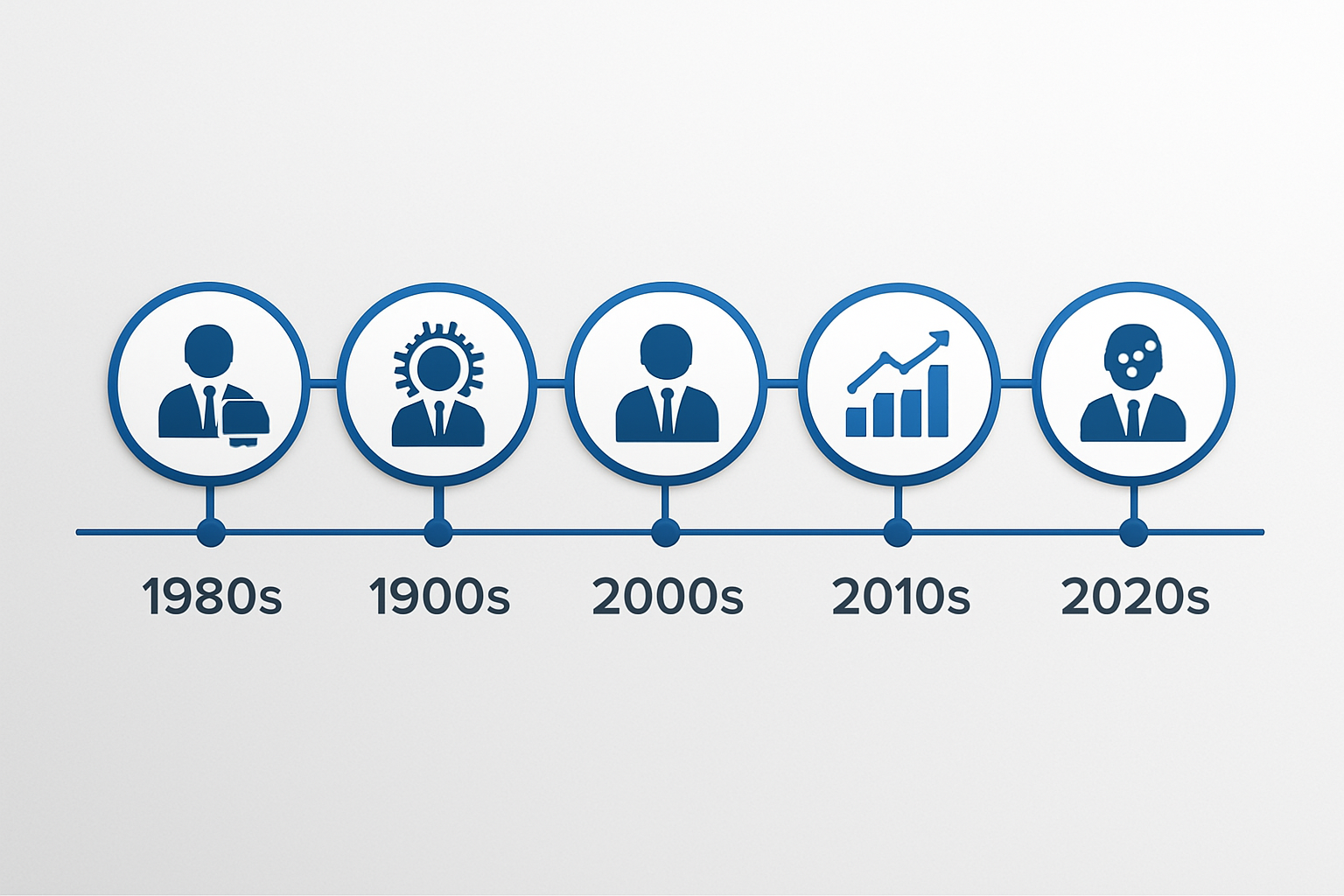
Figure 1.1: Timeline showing the emergence of specialized technology leadership roles from the 1980s to present
The Emergence of the Chief AI Officer
The CAIO role began to appear in forward-thinking organizations around 2016-2017, coinciding with significant advances in artificial intelligence capabilities and growing recognition of AI's strategic potential. Several factors contributed to the creation of this specialized position:
Technological Maturation: Breakthroughs in deep learning, natural language processing, and other AI techniques created new possibilities for business applications beyond traditional analytics. These advances enabled AI to address more complex problems and deliver more significant business value, elevating its strategic importance.
Competitive Pressure: Early adopters of AI in various industries demonstrated compelling competitive advantages, creating pressure for other organizations to develop similar capabilities. This competitive dynamic elevated AI from experimental technology to strategic necessity in many sectors.
Implementation Complexity: Organizations discovered that successful AI implementation required specialized expertise, cross-functional coordination, and new approaches to development and deployment. These unique challenges created the need for dedicated leadership with appropriate technical and organizational knowledge.
Ethical and Governance Concerns: The potential societal impacts and ethical implications of AI created new governance requirements that existing technology leadership roles were not always equipped to address. Dedicated AI leadership provided focused attention on these emerging considerations.
Talent Competition: The scarcity of AI expertise created intense competition for technical talent, requiring specialized recruitment, development, and retention strategies that benefited from dedicated leadership attention.
The earliest CAIOs typically appeared in technology companies, financial services firms, and healthcare organizations—industries with significant data assets, technical capabilities, and clear AI use cases. These pioneering roles often focused on establishing initial AI capabilities, developing proof-of-concept applications, and building specialized teams.
As the role has matured, it has spread across industries and evolved in scope and focus. Today's CAIOs typically have broader responsibilities encompassing enterprise-wide strategy, governance frameworks, ethical considerations, and systematic value creation through AI. This evolution reflects AI's transition from experimental technology to core business capability.
Organizational Positioning and Reporting Relationships
Organizations have positioned the CAIO role in various ways, reflecting different perspectives on AI's relationship to existing functions and its strategic importance. Several common organizational models have emerged:
CAIO as Peer to CIO/CTO: Some organizations position the CAIO as a peer to traditional technology leaders, reporting directly to the CEO or COO. This model emphasizes AI's strategic importance and distinct requirements, providing the CAIO with significant autonomy and visibility. It works well when AI represents a fundamental strategic capability requiring dedicated executive attention.
CAIO Reporting to CIO/CTO: Other organizations place the CAIO under traditional technology leadership, viewing AI as an extension of existing technology capabilities. This model facilitates integration with broader technology strategy and infrastructure but may limit AI's strategic influence. It works well when AI initiatives require close coordination with existing technology functions.
CAIO Reporting to Chief Data Officer: Some organizations position the CAIO under the Chief Data Officer, recognizing the foundational relationship between data capabilities and AI success. This model emphasizes the data-AI continuum but may underemphasize AI's broader strategic and transformational aspects.
CAIO as Part of Innovation Function: Some organizations place the CAIO within innovation or R&D functions, emphasizing AI's role in creating new capabilities and business models. This positioning works well for organizations focusing on AI-driven innovation but may limit integration with core operations.
Distributed AI Leadership: Rather than creating a dedicated CAIO position, some organizations distribute AI leadership responsibilities across existing roles, with coordination through governance committees or centers of excellence. This approach can work for organizations with limited AI initiatives but often struggles to provide consistent direction as AI adoption scales.
The optimal positioning depends on several factors, including organizational size and structure, industry context, strategic priorities, existing leadership capabilities, and AI maturity. Organizations should consider these factors carefully when establishing or evolving the CAIO role, recognizing that the appropriate model may change as AI initiatives mature and organizational needs evolve.
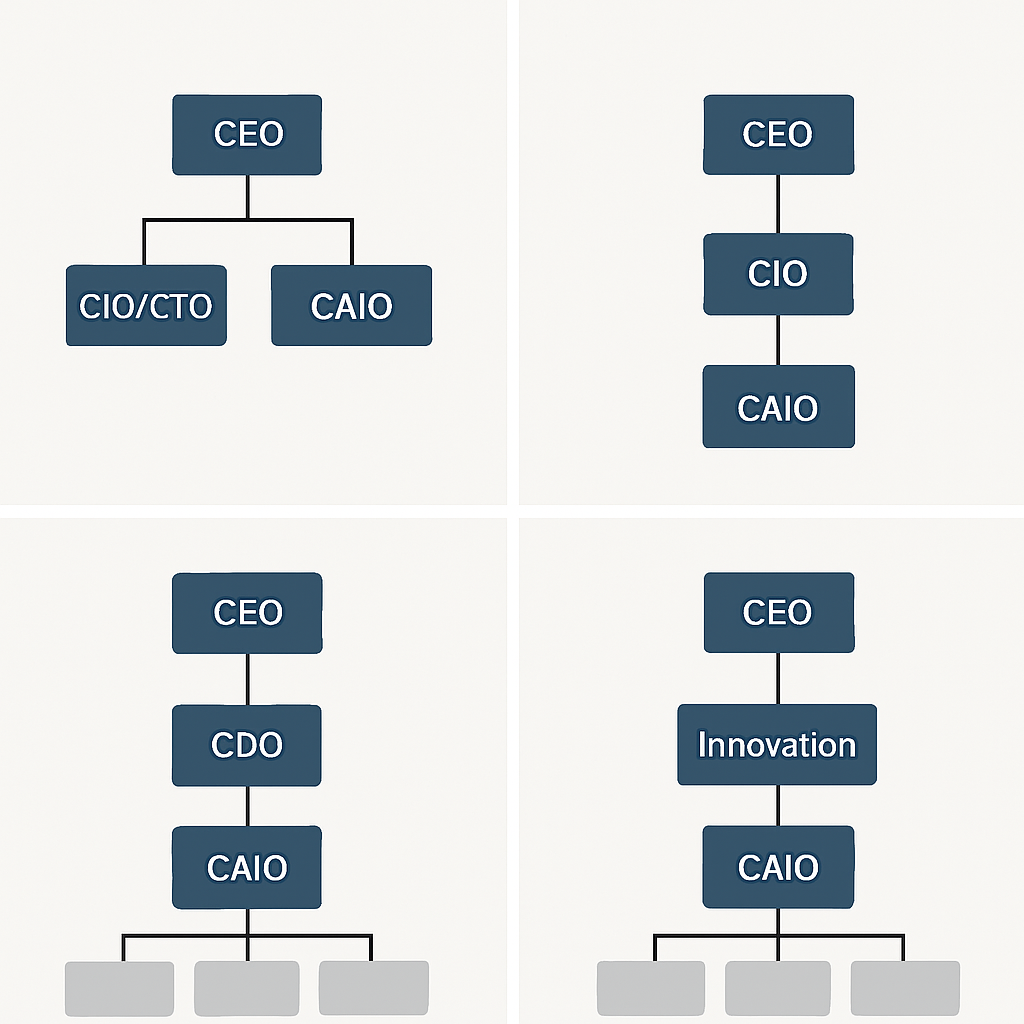
Figure 1.2: Common organizational positioning options for the Chief AI Officer role
Relationship with Other Executive Roles
The effectiveness of the CAIO depends significantly on productive relationships with other executive roles. These relationships must balance clear accountability with collaborative partnership:
CAIO and CIO: This relationship focuses on integrating AI capabilities with broader technology infrastructure, ensuring appropriate technical foundations, and aligning AI initiatives with enterprise architecture. Potential tensions can arise around technology standards, resource allocation, and implementation approaches, requiring clear delineation of responsibilities and collaborative governance mechanisms.
CAIO and CTO: This relationship centers on technology innovation, research partnerships, and emerging capabilities. Collaboration typically involves evaluating new AI technologies, establishing technical standards, and developing implementation approaches. Clear communication about respective domains and joint innovation processes help manage potential overlaps.
CAIO and CDO (Chief Data Officer): This critical relationship focuses on ensuring that data foundations support AI initiatives, with collaboration on data strategy, quality, governance, and architecture. The CAIO depends on the CDO for data readiness, while the CDO benefits from AI use cases that demonstrate data value. Successful partnerships establish clear handoffs between data preparation and AI development.
CAIO and Business Unit Leaders: These relationships focus on identifying valuable use cases, securing implementation resources, and driving adoption. Effective CAIOs establish structured engagement models with business units, balancing enterprise standards with business-specific needs. Collaborative prioritization processes and shared success metrics help align incentives.
CAIO and Risk/Compliance Leaders: These relationships address governance, ethics, and regulatory compliance for AI applications. Collaboration typically involves developing risk assessment frameworks, establishing monitoring processes, and creating appropriate controls. Successful partnerships balance innovation with appropriate risk management.
Effective CAIOs invest significant time in building and maintaining these relationships, recognizing that AI implementation requires cross-functional collaboration. They establish clear communication channels, joint governance mechanisms, and shared success metrics to facilitate productive partnerships across the organization.
Evolution of Scope and Focus
The scope and focus of the CAIO role have evolved significantly since its initial emergence, reflecting the maturation of both AI technologies and organizational approaches to implementation. This evolution typically progresses through several stages:
Initial Focus (Exploration): Early CAIO roles often emphasized technology exploration, proof-of-concept development, and capability building. These pioneering CAIOs focused on demonstrating AI's potential through targeted use cases, building specialized teams, and establishing initial technical foundations. Their scope typically encompassed a limited set of applications in specific business domains.
Intermediate Focus (Scaling): As organizations gained experience with AI, the CAIO role expanded to address systematic implementation and scaling challenges. These CAIOs focused on establishing enterprise standards, developing reusable capabilities, and creating implementation methodologies. Their scope broadened to encompass multiple business domains and a wider range of use cases.
Advanced Focus (Transformation): Mature CAIO roles now emphasize strategic transformation, focusing on fundamental business model changes, enterprise-wide capability development, and systematic value creation. These CAIOs focus on embedding AI capabilities throughout the organization, developing comprehensive governance frameworks, and driving cultural change. Their scope encompasses enterprise-wide transformation and strategic direction-setting.
This evolution reflects AI's transition from experimental technology to core business capability. Early CAIOs focused primarily on technical feasibility and initial value demonstration, while today's CAIOs increasingly focus on strategic impact, organizational integration, and systematic value creation.
The evolution also reflects changing organizational priorities around AI. Initial efforts typically emphasized technical capabilities and isolated use cases, while mature approaches focus on enterprise integration, ethical considerations, and sustainable value creation. This shift requires CAIOs to develop broader leadership capabilities beyond technical expertise.
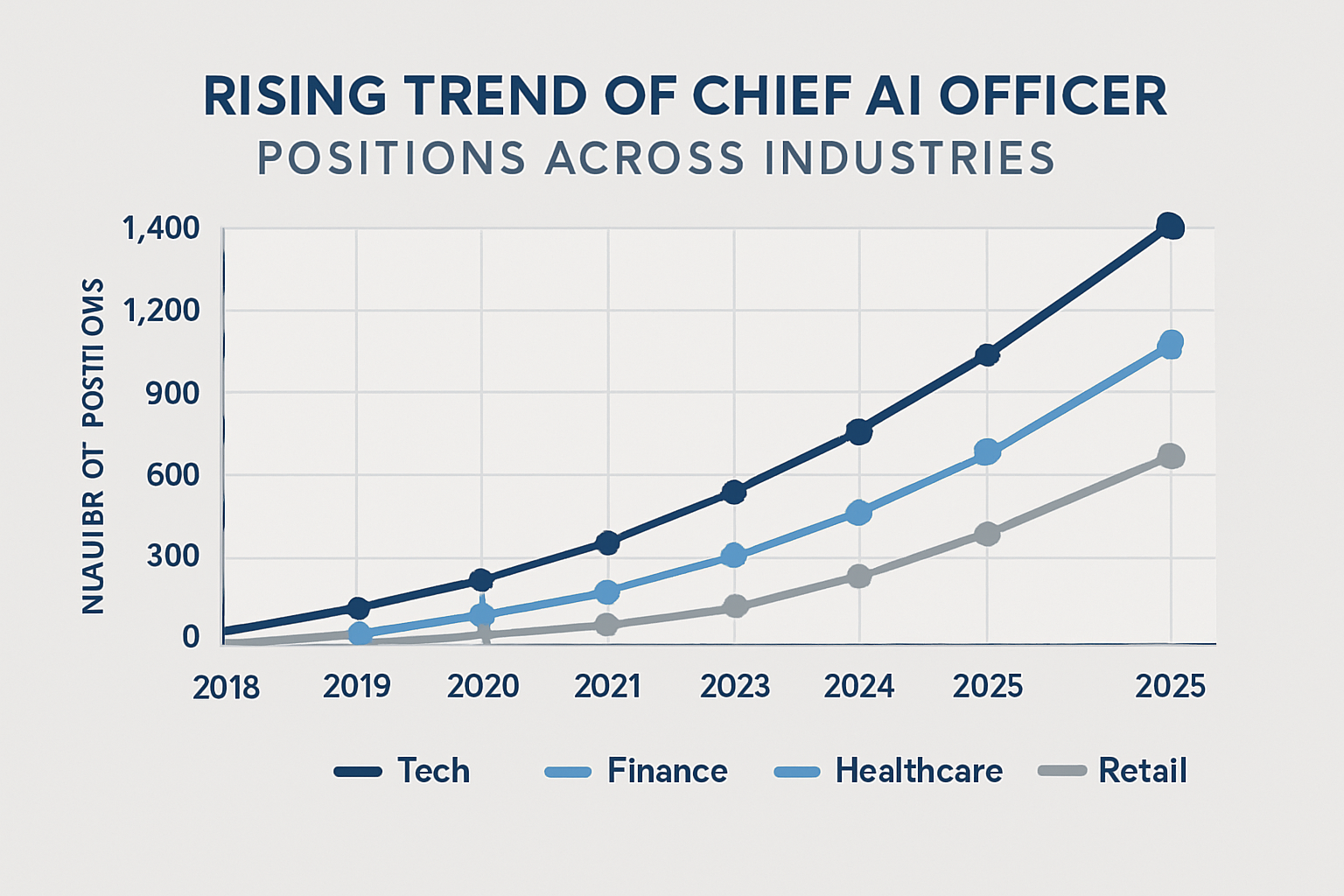
Figure 1.3: Evolution of the CAIO role scope and focus over time
Industry Variations in the CAIO Role
While the CAIO role shares common elements across organizations, significant variations exist across industries, reflecting different AI maturity levels, use case priorities, and implementation challenges:
Technology Sector: CAIOs in technology companies typically focus on product innovation, platform capabilities, and competitive differentiation through AI. They often have strong technical backgrounds and close alignment with product development functions. Their role frequently emphasizes cutting-edge research, talent acquisition, and external ecosystem development.
Financial Services: CAIOs in financial institutions typically focus on risk management, customer experience enhancement, and operational efficiency. They often have strong regulatory awareness and close alignment with risk and compliance functions. Their role frequently emphasizes governance frameworks, model validation, and explainability requirements.
Healthcare: CAIOs in healthcare organizations typically focus on clinical decision support, operational optimization, and research acceleration. They often have strong domain knowledge and close alignment with clinical leadership. Their role frequently emphasizes data privacy, outcome validation, and integration with clinical workflows.
Manufacturing: CAIOs in manufacturing companies typically focus on operational optimization, quality improvement, and supply chain enhancement. They often have strong operational technology backgrounds and close alignment with production leadership. Their role frequently emphasizes integration with physical systems, real-time analytics, and edge computing applications.
Retail: CAIOs in retail organizations typically focus on customer experience personalization, demand forecasting, and supply chain optimization. They often have strong marketing and operations backgrounds. Their role frequently emphasizes real-time analytics, omnichannel integration, and customer journey enhancement.
These variations highlight the importance of adapting the CAIO role to specific industry contexts and organizational needs. Effective CAIOs understand their industry's unique challenges, regulatory requirements, and value creation opportunities, tailoring their approach accordingly.
Future Directions for the CAIO Role
As AI technologies and organizational approaches continue to evolve, the CAIO role will likely undergo further transformation. Several emerging trends suggest potential future directions:
Integration with Business Strategy: The CAIO role will likely become more deeply integrated with business strategy development, with increasing focus on AI-enabled business models and competitive differentiation. Future CAIOs may participate more actively in strategic planning processes and business model innovation.
Expanded Ethical Leadership: As societal concerns about AI impacts grow, the CAIO role will likely expand to encompass broader ethical leadership, focusing on responsible innovation, societal impact assessment, and stakeholder engagement. Future CAIOs may serve as ethical stewards for their organizations' AI initiatives.
Ecosystem Orchestration: As AI implementation increasingly involves external partnerships, the CAIO role will likely expand to encompass ecosystem orchestration, focusing on partner selection, collaborative innovation, and value sharing arrangements. Future CAIOs may manage complex networks of technology providers, research partners, and implementation collaborators.
Democratization Leadership: As AI capabilities become more accessible to non-specialists, the CAIO role will likely evolve to focus on democratization leadership, emphasizing capability distribution, citizen developer enablement, and broad organizational empowerment. Future CAIOs may focus less on centralized development and more on enabling distributed innovation.
Potential Role Evolution: As AI becomes fully integrated into business operations, the distinct CAIO role may eventually evolve or merge with other leadership positions. Some organizations may integrate AI leadership into broader digital or technology roles, while others may distribute AI responsibilities across multiple functions.
These potential directions suggest that the CAIO role will continue to evolve in response to technological developments, organizational learning, and changing strategic priorities. Effective CAIOs will adapt to these changes, continuously redefining their role to address emerging needs and opportunities.
Conclusion
The emergence and evolution of the Chief AI Officer role reflect artificial intelligence's transition from experimental technology to strategic business capability. This specialized leadership position has developed in response to AI's unique implementation challenges, strategic potential, and governance requirements, following a pattern seen with previous technology leadership roles.
Today's CAIOs face the complex challenge of balancing technical expertise with strategic leadership, innovation with governance, and specialized capabilities with enterprise integration. They must navigate complex organizational relationships, adapt to industry-specific requirements, and continuously evolve their role as AI technologies and organizational approaches mature.
The future CAIO role will likely become more strategic, ethical, collaborative, and enabling as AI becomes more deeply integrated into business operations and strategy. While the specific form may evolve, the need for dedicated AI leadership will persist as organizations continue to navigate the opportunities and challenges of this transformative technology.
Organizations establishing or evolving the CAIO role should consider their specific context, strategic priorities, and AI maturity level, recognizing that the optimal approach will vary across industries and organizations. By thoughtfully defining this leadership position, organizations can accelerate their AI journey and maximize the strategic value of their artificial intelligence investments.